
Durban to Kasumbalesa: The Route Shaping Regional Trade


Southern Africa's trade potential is not being held back by a lack of markets or trade agreements. Instead, the region's ability to move goods efficiently across borders is emerging as one of the biggest determinants of whether it can unlock greater intra-African trade.
That is the central message from a recent analysis published by TradeMark Africa, which uses trade and logistics data to identify where governments, border agencies and logistics stakeholders need to focus their efforts to improve regional trade performance. The analysis points to key transport corridors, particularly the route linking Durban in South Africa to Kasumbalesa on the border of Zambia and the Democratic Republic of the Congo (DRC), as critical to the region's economic future.
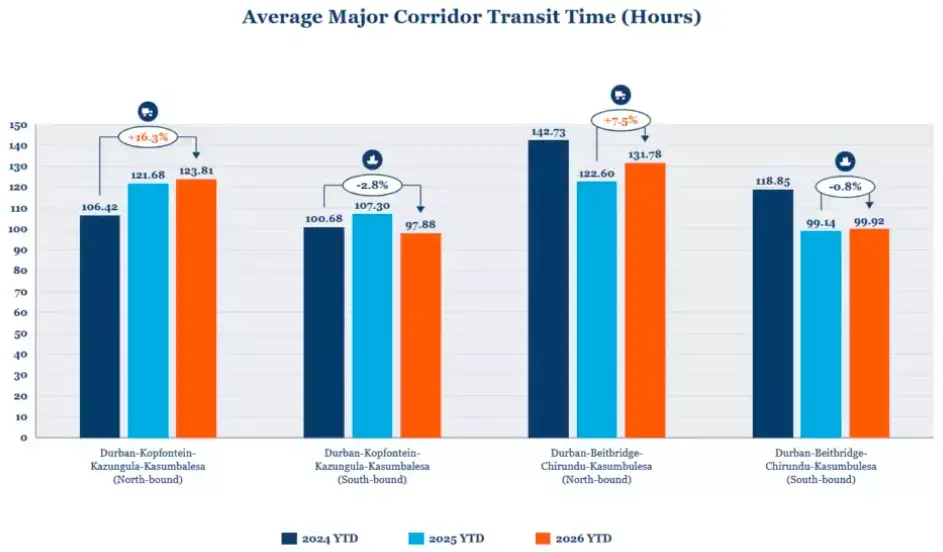
The findings come as African countries continue to pursue deeper regional integration through initiatives such as the African Continental Free Trade Area (AfCFTA). While trade agreements can create opportunities for commerce, TradeMark Africa argues that the real test lies in how efficiently goods move through ports, roads, border crossings and customs systems.
The analysis highlights the North-South Corridor as one of the most important trade routes in the region. Beginning at the Port of Durban and extending through Zimbabwe and Zambia to the DRC, the corridor connects some of Southern Africa's largest production centres, consumer markets and mining regions. It is a route that carries significant volumes of cargo and serves as a vital link for regional supply chains.
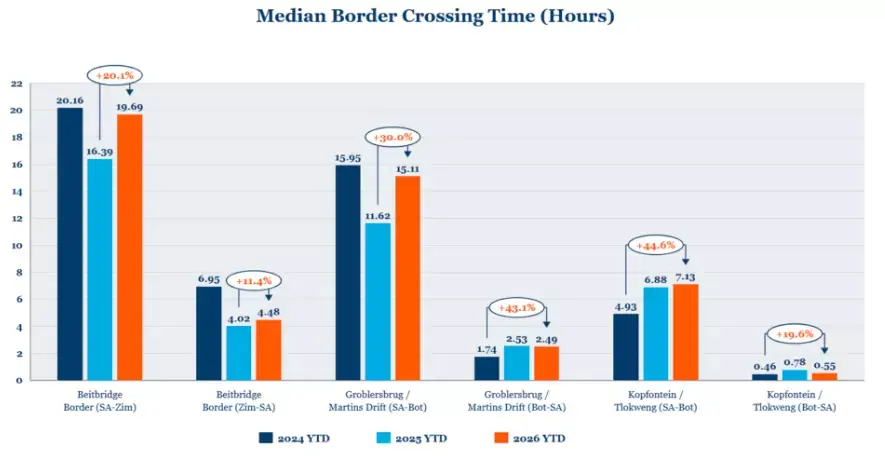
However, trade data suggests that the corridor continues to face challenges that increase costs and reduce efficiency. According to TradeMark Africa, logistics bottlenecks and delays along key trade routes continue to affect the movement of goods and limit the region's ability to fully benefit from its trade potential. The importance of these corridors extends beyond individual countries. As regional value chains become increasingly important, the ability to move goods quickly and predictably across multiple borders is becoming a competitive advantage. Delays at one point in the supply chain can have consequences across entire trade networks.
TradeMark Africa's analysis reflects a broader shift in how trade competitiveness is being viewed globally. Increasingly, attention is moving beyond tariffs and market access towards operational efficiency. The ability to clear goods quickly, process customs documentation efficiently and reduce border delays is becoming just as important as trade policy itself.
This trend can be seen in other regions as well. Recent discussions around changes to customs procedures in Europe, particularly those affecting cross-border e-commerce shipments, have highlighted how border management and customs systems can reshape supply chains. In Southern Africa, the challenge is similar. The question is not only whether goods can be traded, but how efficiently they can move from origin to destination.
TradeMark Africa's findings suggest that some of the region's biggest opportunities lie in addressing long-standing operational bottlenecks. Border posts remain a key area of focus. Even where infrastructure investments have been made, challenges related to customs procedures, coordination among border agencies and cargo processing continue to affect transit times.
The analysis ultimately presents a practical view of regional integration. While trade agreements remain important, the success of initiatives such as AfCFTA will depend heavily on what happens at ports, border crossings and along transport corridors. Efficient trade routes can help reduce costs, support businesses and create stronger links between African markets.
Source: Logistics Update Africa


Comments